Lesotho’s Malerato Khoeli Honoured Among 100 Women Heroes by FAO for Transforming Agriculture

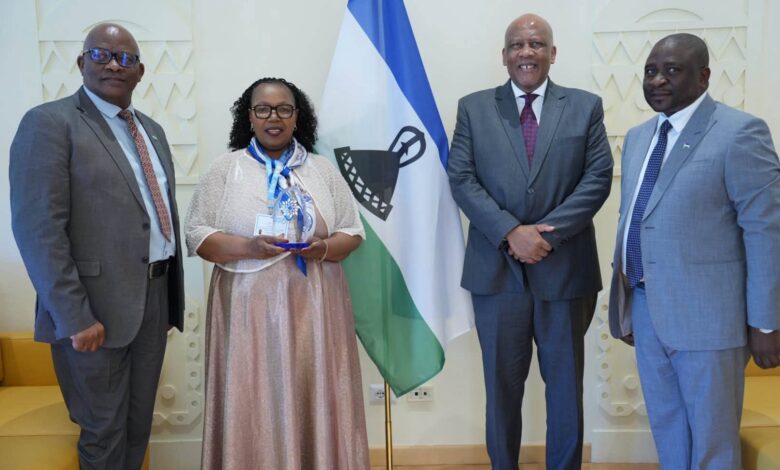
Lesotho’s Malerato Khoeli has earned international recognition for her contribution to agriculture after being named among 100 women from around the world honoured with the inaugural Food and Agriculture Organization of the United Nations (FAO) 100 Women Heroes Award. The prestigious recognition took place during the World Food Forum in Rome, celebrating women whose dedication, innovation and leadership are helping transform agrifood systems. Khoeli’s achievement highlights the important role women farmers play in strengthening food security, supporting rural communities and creating economic opportunities. Her journey from a small layers farm to piggery and grain production reflects the determination required to build a sustainable agricultural business. The award also shines a spotlight on women in Lesotho who continue to contribute to national development through farming, despite the challenges they face.
The inaugural FAO 100 Women Heroes Award recognises women whose work is helping shape the future of agriculture and food production. FAO Director-General Dr. Qu Dongyu described the honourees as women of substance who are transforming farming into something far greater than simply putting food on the table. He said their work reaches into the very foundations of human life, reflecting agriculture’s essential role in feeding families, supporting livelihoods and sustaining communities. The 100 award recipients represent millions of women farmers whose contributions often remain unnoticed despite their importance to food production around the world. Many have overcome poverty and difficult beginnings to become reliable suppliers of agricultural produce in their villages, countries and international markets.
Dr. Qu praised the courage of women who have chosen agriculture as a profession and business, often working under difficult economic and social conditions. He highlighted their ability to develop practical, locally driven solutions and introduce scientific innovations that make agrifood systems more efficient and inclusive. These contributions demonstrate that women are not only participants in agriculture but also leaders who can improve productivity, strengthen rural economies and support more sustainable food systems. Their experience and knowledge can help communities respond to changing agricultural conditions while improving access to food and income. By recognising their achievements, the FAO aims to bring greater visibility to women whose work deserves broader public and institutional support.
Addressing gender inequality in agriculture remains an important part of building a stronger global food system. Dr. Qu said closing the gender gap in agriculture could increase global gross domestic product by $1 trillion and lift 45 million people out of food insecurity. These figures highlight the economic and social benefits of giving women better access to agricultural resources and opportunities. Women farmers often face barriers involving land ownership, finance, technology, training and access to markets, which can limit the growth of their businesses. Reducing these barriers would allow more women to expand production, improve their incomes and contribute more effectively to food security and economic development.
For Khoeli, receiving the international award represents years of hard work and determination in the agricultural sector. She described the recognition as humbling and hard-earned, emphasising the personal sacrifices required to reach this milestone. Reflecting on her journey, she said, “It took sweat and blood to be mentioned among these very few.” Her experience began with a small layers farm before expanding into piggery and grain production, demonstrating her willingness to explore different areas of agriculture. This progression reflects the effort involved in developing an agricultural enterprise, where success depends on persistence, practical knowledge and the ability to respond to changing business needs.
Khoeli’s growth from a small poultry operation into multiple areas of agricultural production also illustrates the opportunities available to farmers who build their businesses over time. Poultry production, pig farming and grain cultivation serve different needs within the agricultural value chain, from supplying food to creating opportunities for trade and local employment. Expanding into different forms of production can help farmers develop new income streams and reach a wider range of customers. However, agricultural businesses also require access to suitable inputs, reliable markets, finance and the knowledge needed to manage production effectively. Khoeli’s recognition brings attention to the importance of supporting farmers who are working to establish and grow enterprises that can contribute to the wider economy.
In dedicating her award to the Basotho people and the community of Khanyane, Khoeli emphasised the importance of collective effort in agricultural development. Her acknowledgement of the community reflects the partnerships that help farmers build sustainable businesses and strengthen local food production. Agricultural progress often depends on cooperation between farmers, families, communities and organisations that provide knowledge, resources and market opportunities. Strong community partnerships can help farmers exchange experience, address shared challenges and create better opportunities for rural households. By recognising Khanyane alongside the people of Lesotho, Khoeli highlighted that agricultural achievements can also reflect the support and commitment of the communities behind them.
Khoeli also praised the FAO for recognising women farmers whose contributions frequently go unnoticed. Across many communities, women play important roles in producing food, managing agricultural businesses and supporting household livelihoods, yet their work does not always receive the recognition or resources it deserves. International awards can help bring these contributions into public view and encourage governments, institutions and businesses to invest more in women-led agriculture. Recognition can also strengthen the confidence of women who are considering farming as a long-term career or business opportunity. Khoeli’s achievement therefore carries significance beyond her personal success, as it highlights the wider contribution of women to Lesotho’s agricultural development.
Her message to women in Lesotho was one of encouragement and determination. Khoeli urged women to continue pushing forward, stressing that children, families and communities need their leadership. She also highlighted the importance of making agrifood businesses attractive to young girls, helping them see agriculture as a viable path towards financial independence and professional achievement. For young women, exposure to successful farmers can challenge the idea that agriculture offers limited opportunities and demonstrate the potential for innovation, entrepreneurship and business growth. Building this interest will require practical support, including agricultural education, mentorship, access to finance and opportunities to participate in modern farming and food businesses.
Encouraging more young people to enter agriculture is particularly important for the long-term future of food production. Farming businesses need new generations of skilled workers and entrepreneurs who can combine practical experience with improved technology and business knowledge. Women such as Khoeli can help inspire this generation by showing how agricultural enterprises can develop from modest beginnings into broader production operations. Schools, training institutions and agricultural organisations can strengthen this message by providing young people with opportunities to learn about farming, food processing, livestock management and agricultural marketing. Making agriculture more accessible and commercially attractive to young women could help strengthen rural economies while supporting the next generation of food producers.
The presence of His Majesty King Letsie III at the award ceremony added further significance to Lesotho’s participation in the international event. The King attended as the leader of Lesotho’s delegation in his roles as African Union Champion for Nutrition and Food Security and FAO Special Ambassador for Nutrition. His involvement reflects the importance Lesotho places on food security and nutrition, issues closely connected to agricultural productivity and rural development. The King was also expected to address the closing ceremony and World Food Day celebration on Friday. His participation placed Khoeli’s achievement within a broader national and international effort to improve access to nutritious food and strengthen food systems.
Food security remains closely linked to the ability of farmers to produce sufficient food, earn sustainable incomes and access functioning markets. Recognising agricultural leaders can help draw attention to the people and businesses working to address these challenges at community level. In Lesotho, supporting women farmers can contribute to rural livelihoods, strengthen domestic food production and create opportunities for young people to participate in agribusiness. Such progress requires more than individual determination, as farmers also need supportive policies, infrastructure, agricultural services and access to financial resources. Khoeli’s award provides an opportunity to consider how greater investment in women-led agricultural enterprises could benefit households and communities across the country.
Malerato Khoeli’s recognition among the 100 women honoured by the FAO marks an important moment for Lesotho and its agricultural sector. Her journey from a small layers farm to piggery and grain production demonstrates the commitment involved in building an agricultural business and expanding its contribution to food production. The award also reinforces the message that women farmers deserve greater recognition, stronger support and equal opportunities to develop their enterprises. Through her dedication to the Basotho people and the community of Khanyane, Khoeli has highlighted the value of partnerships and shared progress in agriculture. Her achievement sends a clear message to women and girls in Lesotho that farming can offer meaningful opportunities for leadership, entrepreneurship and national development, while helping build a more secure and sustainable food future.
Join 'Lesotho News' WhatsApp Channel
Get breaking Lesotho news — delivered directly to your WhatsApp.
CLICK HERE TO JOIN